Category: Uncategorized

  • ‘No Cap,’ ‘It’s Giving…,’ ‘Low-Key’: 10 Internet Slang Words Your Textbook Will Never Teach You

    ‘No Cap,’ ‘It’s Giving…,’ ‘Low-Key’: 10 Internet Slang Words Your Textbook Will Never Teach You

    You know English grammar. You know a few thousand words. But internet slang words and meanings are their own thing, and no class ever taught you them. Then you open a comment section, or a group chat, and someone writes “ngl this show is giving mixed signals, no cap” and you understand every single word… except the sentence makes no sense.

    That’s because none of these words live in a dictionary. They live in captions, comments, and texts, and they can change what a sentence means without changing its grammar at all.

    Here are 10 internet slang words and meanings you’ll actually run into, from captions to comment threads, each one explained in plain English with a note on tone and where you’ll hear it.

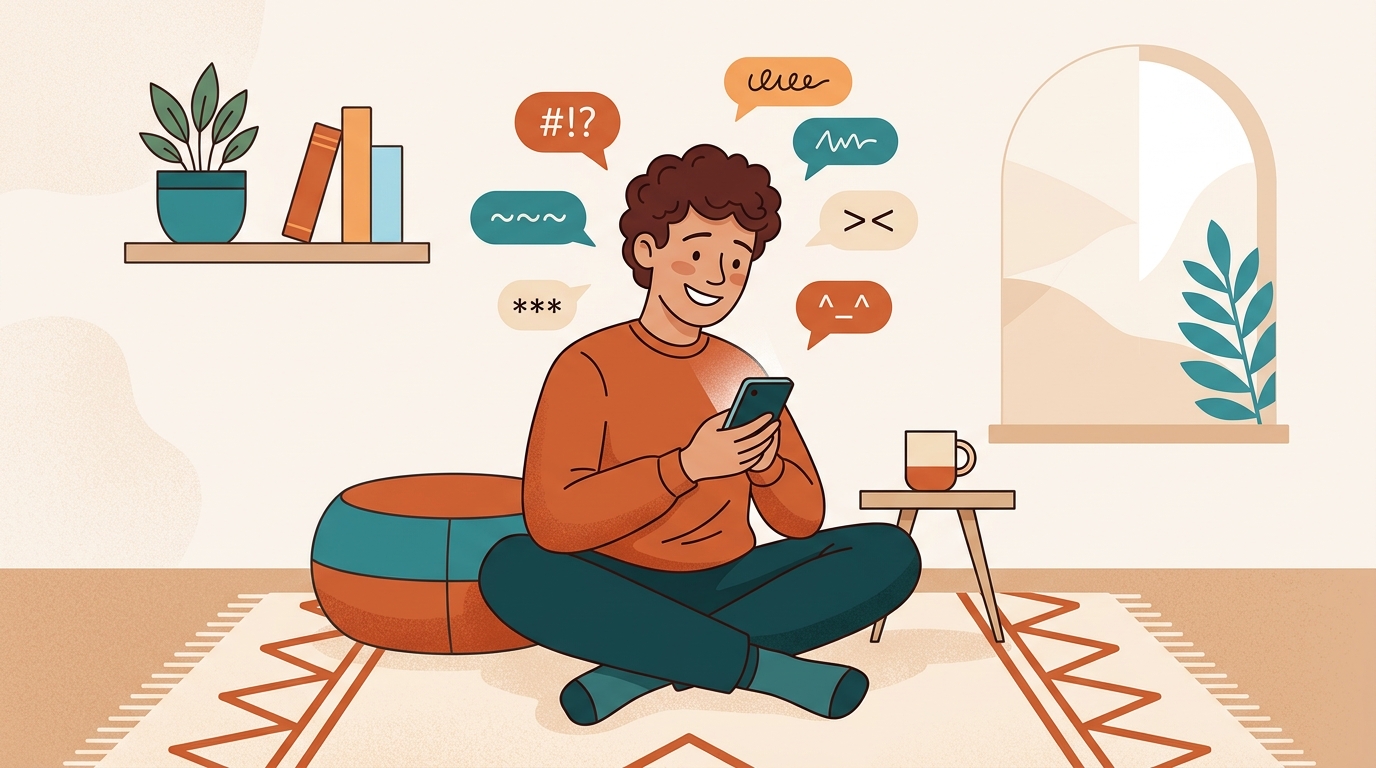
    Person reading a text full of internet slang words and meanings like no cap and rizz

    The One Rule First: Keep It Out of Emails

    Before the list, one warning. Every word here is casual, spoken-style English. It’s fine in a text to a friend, a comment under a video, or a group chat. It is not fine in an email to your professor, a cover letter, or a message to your manager.

    Mixing these into formal writing is the fastest way to send the wrong signal. Save them for casual, spoken contexts only.

    10 Internet Slang Words and Meanings You’ll Actually Hear

    1. No cap

    • Meaning: “I’m not lying” or “seriously.”
    • Tone: casual, drops at the start or end of a sentence to back up a claim.
    • Where you’ll see it: video captions, comment sections, texting.

    Example: “This coffee shop has the best pastries, no cap.”

    2. It’s giving [x]

    • Meaning: “it has the energy of ___.” You fill the blank with almost anything: a mood, a person, a vibe.
    • Tone: casual, describes a feeling rather than a fact.
    • Where you’ll see it: fashion and reaction videos, memes, comments under photos.

    Example: “That outfit is giving main character.”

    3. Low-key / high-key

    • Meaning: low-key means “kind of, but I don’t want to make a big deal of it.” High-key means the opposite: “very much, no hiding it.”
    • Tone: casual, softens or boosts an opinion.
    • Where you’ll see it: texting, comments, captions.

    Example: “I low-key love this song.” / “I high-key need a nap.”

    4. Deadass

    • Meaning: “seriously, I’m not joking,” a stronger cousin of “no cap.”
    • Tone: casual, often mid-sentence.
    • Where you’ll see it: texting, voice messages, comment replies.

    Example: “I deadass forgot we had a test today.”

    5. Rizz

    • Meaning: charisma, especially the kind that helps you attract someone. Short for “charisma.”
    • Tone: casual, often used as a noun (“he has rizz”) or a rating (“that’s mid rizz”).
    • Where you’ll see it: short-form video, group chats, dating-adjacent memes.

    Example: “He walked up and just started talking, the rizz was unreal.”

    6. Based

    • Meaning: someone stating an opinion confidently, without caring if it’s popular. It is not “correct,” just unapologetically themselves.
    • Tone: casual, a compliment for confidence, not necessarily agreement.
    • Where you’ll see it: comment sections, forums, memes.

    Example: “He said pineapple belongs on pizza and didn’t back down. Based.”

    7. The ick

    • Meaning: a sudden, often small thing someone does that kills your attraction to them, instantly.
    • Tone: casual, usually paired with “get” or “give.”
    • Where you’ll see it: dating story videos, comment sections, memes.

    Example: “He chewed with his mouth open and I got the ick.”

    8. Hits different

    • Meaning: something feels more powerful, nostalgic, or emotional than usual, in this specific moment.
    • Tone: casual, follows the thing it’s describing.
    • Where you’ll see it: captions under music, throwback photos, food posts.

    Example: “Coffee on a rainy day just hits different.”

    9. Main character energy

    • Meaning: acting like the center of your own story, in a confident, good way.
    • Tone: casual, almost always a compliment.
    • Where you’ll see it: captions, comment sections, video trends.

    Example: “She walked into that interview like she had main character energy.”

    10. Say less

    • Meaning: “I understand, you don’t need to explain further,” or “consider it done.”
    • Tone: casual, often a standalone reply.
    • Where you’ll see it: texting, comment replies.

    Example: “Wanna get pizza tonight?” “Say less.”

    Textbook versus phone illustrating internet slang words and meanings not found in dictionaries

    Why Internet Slang Words and Meanings Aren’t In Your Textbook

    Textbooks move slowly. This kind of slang moves fast, changes tone by the month, and lives almost entirely in speech and captions, not print. By the time a word makes it into a course book, it’s usually already out of date.

    That’s exactly the gap Subturtle is built for. When you hit a phrase like this while watching a video or scrolling a comment thread, you save it on the spot, with the context still attached, instead of losing it the second the clip ends. It works well next to a list built the other way round, from phrases instead of single words.

    Comment sections don’t wait for anyone. A good outside source, like Merriam-Webster’s own slang watch list, shows how fast this kind of vocabulary actually turns over.

    How to Actually Learn These Without Sounding Try-Hard

    Don’t force these into your own speech the day you learn them. Notice them first. Watch how often native speakers actually use each one, and in what tone. “No cap” said constantly can sound different from “no cap” dropped once at the right moment.

    Save the ones you hear often, with the sentence they came from. The AI Coach in your dashboard brings your saved phrases back on a schedule, so you get a feel for the tone before you ever try one out loud.

    Watch a few more clips, listen for these 10 words, and you’ll start hearing them everywhere.

    Add Subturtle to Chrome, free

  • The Culture Behind the Words: How Learning English Opens Up a New World

    The Culture Behind the Words: How Learning English Opens Up a New World

    Grammar books teach you rules. They do not teach you why a joke is funny, why someone says “it’s raining cats and dogs,” or why your favorite show gets a laugh at a line that seems, on paper, completely normal. That gap is exactly why learning English through culture matters so much more than memorizing verb tables.

    Language and culture grow together. Idioms, jokes, and even small talk about the weather all come from shared history and shared life. Once you start learning English through culture, whole layers of the language finally make sense.

    A student relaxing at home while learning English through culture by watching a TV show

    Why Grammar Alone Will Not Make You Fluent

    You can know every tense in English and still feel lost in a real conversation. That happens because fluency is not only about correct sentences. It is about knowing what people mean, not just what they say.

    Researchers have studied this link between language and thought for decades. A well known BBC Future report on how language shapes thinking shows that the words a culture uses can change how its speakers see time, color, and even blame. Learning a language without its culture is like learning the notes of a song but never hearing the music. This is exactly why learning English through culture works better than memorizing rules alone.

    Idioms and Humor: The Heart of Culture

    Idioms are small windows into culture. Each one carries a little story inside it.

    • “Break the ice” comes from real ships breaking frozen water to let other boats pass. Now it just means starting a friendly conversation.
    • “Spill the beans” means to share a secret, and nobody agrees exactly where it came from, which is its own fun bit of culture.
    • “That’s a piece of cake” means something is easy, borrowed from old cake-walk contests where the prize was, well, a cake.
    Illustration of English idioms used when learning English through culture

    Humor works the same way. British sarcasm, American directness, and Australian teasing all sound different because the cultures behind them are different. You cannot laugh at the right moment in a sitcom until you understand the culture the joke was born in. This is what learning English through culture really means: catching the joke, not just the words.

    How TV Shows Teach You to Learn English Through Culture

    This is where real content beats a textbook every time. Movies, TV shows, and songs carry culture inside every line. When you watch a show and hear a phrase you do not know, you are not just learning a word. You are learning how people actually talk, joke, and connect. Our guide on how to actually learn English from your favorite shows walks through the habit in more detail.

    Subturtle is built around this exact idea. Instead of stopping your show to look up a word in a separate app, you save the phrase straight from the subtitles, right when you hear it, with the scene still fresh in your mind. That is how idioms and cultural references actually stick.

    Once you have saved a few phrases, the learning does not stop there. Open your dashboard and the AI Coach turns those saved lines into flashcards built just for you, so every review session is full of phrases pulled from shows you actually watched, not a random word list.

    Small Culture Habits That Build Big Fluency

    You do not need to move to another country to learn English through culture. A few small habits, done often, go a long way.

    • Watch with attention. Pick one show and notice the jokes, not just the plot.
    • Save what surprises you. If a phrase makes you pause, that is usually a sign it is worth learning.
    • Ask “why,” not just “what.” Why is this funny? Why did they say it that way? The answer is almost always cultural.
    • Listen to music too. Song lyrics carry slang and feeling that textbooks never touch.

    Learning English Through Culture: A New World, One Phrase at a Time

    Learning English through culture turns study time into something closer to real life. You stop translating word by word and start understanding the way people actually think, joke, and connect. That is the real reward of learning a language: not just new words, but a new way to see the world.

    Ready to start picking up culture straight from the shows you already watch? Add Subturtle to Chrome and turn your next episode into your next lesson.

  • Hello World!

    This website serves as the inaugural showcase of Subturtle’s capabilities.

    Note: This post will remain published in appreciation of the early visitors who have already shown their support by liking it.

    Stay tuned for more updates! 🙂